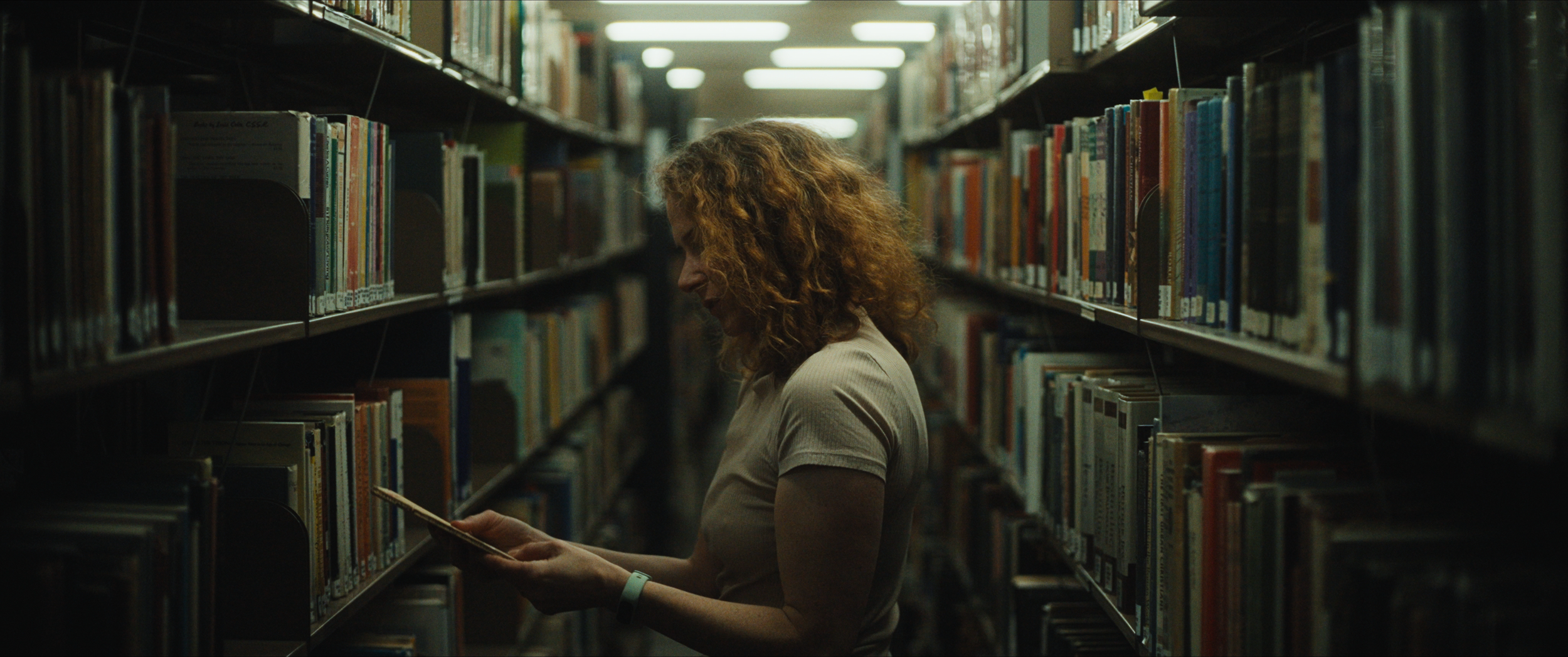
Case Studies

Dance of Camera
Chapter 4
Only Kids: Choreography, Anticipation and Performance
Only Kids assisted in supporting my approach to cinematography specifically through the initial altercation between the two main characters Chrissy and Andi in the neighbour’s house. The scene begins with Andi discovering Chrissy sneaking around the neighbour’s house and playfully belittling her. Their exchange gradually escalates as Chrissy withdraws onto the couch when Andi follows, leading to a physical tussle that develops from playful sibling behaviour into a more aggressive confrontation. The argument is then abruptly interrupted by the neighbours returning home, forcing both characters to jump behind the couch to avoid being discovered.
Within this scene, I wanted the camera’s movement, proximity and framing to reflect the changing energy between the characters. Initially, the handheld camera remained relatively controlled, observing the sisters from a slight distance with slower and more deliberate movements. As the scene progressed and the argument became more heated, I began moving closer, increasing the abruptness of my responses. The performers gradually started filling more of the frame, shifting the visual emphasis from their relationship within the environment to the intensity of their performance.
We conducted several rehearsals, yet when we found ourselves on set much of our planning was placed second to experimentation. Our original intention was to capture this scene on a 25mm lens; however, we found that a longer focal length better communicated the intimacy and frenetic energy of the confrontation. We eventually committed to a 100mm lens, which significantly changed the relationship between the camera, performers and surrounding space. Its narrower field of view required greater precision in my framing, while the resulting compositions placed stronger emphasis on the dramatic intent of the scene.
This decision presented practical challenges. Having discovered the long-lensed approach late in the first shooting day, we returned to the sequence the following day to complete the coverage with the 100mm. Differences in the improvised dialogue between takes subsequently created continuity challenges during the postproduction phase. Though the editor Luke Daly helped reconcile these differences, this experience demonstrated how cinematographic experimentation could impact other aspects of production.
Operating handheld with the 100mm lens demanded considerable physical awareness. The performers’ movements shifted rapidly, requiring me to anticipate changes in direction while sustaining an appropriate composition. My familiarity with their blocking allowed me to recognise physical cues and prepare my own movements before their actions fully developed. Weight distribution, balance and spatial awareness became significantly important within the restricted location, where I also needed to maintain safe distances from the performers and surrounding objects.
Reflecting on this experience, Manning's (2009) concept of preacceleration, specifically the anticipation of movement resonates quite strongly with my creative practice and the approach on Only Kids. Instead of simply responding after the performer has moved, I found myself preparing my body to respond to potential movements I sensed developing. The robust rehearsals bolstered my embodied knowledge and allowed me to adjust instinctively, while allowing the performers the freedom to dial in their performance.
The resulting images are not always traditionally composed or polished. There were moments where the increasingly frantic camera movement sacrificed precise framing in order to maintain connection to the actors. This initially challenged my desire as a cinematographer to achieve carefully balanced compositions and controlled images. However, the imperfections became appropriate to the film’s naturalistic visual language. You could almost say it was imperfectly perfect.
Through this experience I was able to acknowledge that a decisions' effectiveness can't be measured by its ability to be technically perfect within a single frame. My embodied understanding enabled me to prioritize responsiveness to maintain focus on the action, but what may have resulted in an imperfect frame in isolation became meaningful in the context of the entire scene. This reinforced my approach by supporting that dance informed cinematography influences not only how the camera moves but also why and when it moves.
An insight into the process of rehearsing and choreographing the confrontation scene in Only Kids (2026). (Above) Preproduction rehearsal footage, (Middle) Performance on the day of production, (Bottom) Final cut of the performance
““dual choreography” in which the dancer moves in front of the camera while “the camera also dances and allows the space to dance” ”
Nearness: Improvisation and Reciprocal Movement
Nearness demonstrated my exploration of embodied cinematography through a sequence captured with 16mm black and white film. Featuring Jackson Garcia and Hoyori Maruo in a close embrace, the sequence contained relatively little conventional dance movement; instead, it focused on the intimate relationship between the two performers. Their movements illustrated a sense of vulnerability and longing, as though one was anticipating the loss of the other.
I approached this sequence handheld, maintaining close proximity and framing almost entirely in extreme close ups. Rather than attempting to capture their complete bodies, I followed their hands and facial expressions as they traced one another. By filling the composition with small gestures and details, I wanted to emphasise the intimacy of their connection, allowing even the most subtle movements to become significant within the frame. At times, their bodies appeared to merge, making it difficult to distinguish where one performer ended and the other began.
I began to identify and interesting relationship forming between the performers and the camera as filming progressed. Through my awareness of their breathing and rhythm, I was able to anticipate their movements and adjust my positioning accordingly. Similarly, Jackson and Hoyori became attuned to my movements and began adjusting their performance to accommodate the camera. Both performers would often extend movements and gestures while adjusting timing to allow the camera to capture their movements accordingly sometimes even leading the camera to a final composition.
This exchange reflects Carballido’s (2015) concept of dual choreography referenced in Chapter 2, in which the choreography of the performers and the camera operate in relation to one another. Rather than simply recording the dancers, my camera movements became part of an ongoing exchange with the performers adapting their gestures to the camera while also guiding my movements to specific compositions. My embodied experience allowed me to participate in this relationship instinctively while remaining open to their influence on my own movements.
Reflecting on the completed work, I found the black and white sequences quite successful in communicating the intimacy I intended, contrasting the more open and isolating compositions of the colour sequences. This improvisational approach, however, required a considerable amount of time to develop trust and familiarity between participants. While the resulting images felt organic, the process may be difficult to reproduce within productions operating under strict time constraints. This experience reinforced my understanding that embodied cinematography can emerge through shared physical awareness between performer and cinematographer given the time to develop that relationship.
Raw footage of the black and white 16mm sequence of Nearness (2026)
The Exorcism of Joan Vollmer: Beyond Camera Movement
The process of reflecting on The Exorcism of Joan Vollmer allowed me to establish how choreographic principles could inform cinematography even when the camera is static. This project allowed me to recognise that composition, time and spatial arrangement can be influenced through my embodied knowledge.
The landscapes surrounding Horsham were captured in extreme wide shots under harsh sunlight, emphasising the dry, isolated environment. I deliberately incorporated significant negative space and headroom to suggest an almost godlike presence overlooking the landscape. These compositions were captured statically on a tripod, allowing the subtle movement of the trees and grass in the wind to provide life and movement to otherwise still images. The absence of people further highlighted the isolation, creating an unsettling contrast with the disturbing events explored in the documentary.
The reenactments captured a contrasting approach through low key lighting, static compositions and slow dolly movements. Rather than using a rapid camera movement to heighten tension, I aimed to restrain movement to create a gradual sense of unease. The slow movement towards the performers allowed the disturbing imagery to unfold without offering an escape from what was being depicted.
One composition within the reenactment involved an overhead shot looking down through a slowly rotating ceiling fan towards a performer being tied to a bed. Although the camera remained stationary, the rotation of the fan introduced a continuous rhythm within the frame contrasting the action below. This relationship between stillness and movement connects to Cunningham’s (as cited by Vaughan, 2002) understanding of how camera position and composition can influence the rhythm of movement. By framing the action through the rotating fan, I felt the composition heightened the unsettling nature of the scene without requiring the camera itself to move.
This experience expanded my understanding of embodied cinematography beyond camera movement itself. I began to comprehend that choreographic thinking could inform how I compose an image and direct attention through relationships between performers, objects and space within a static frame. Reflecting on The Exorcism of Joan Vollmer helped me establish how stillness and restraint could offer opportunities to consider choreographic principles within cinematographic practice.
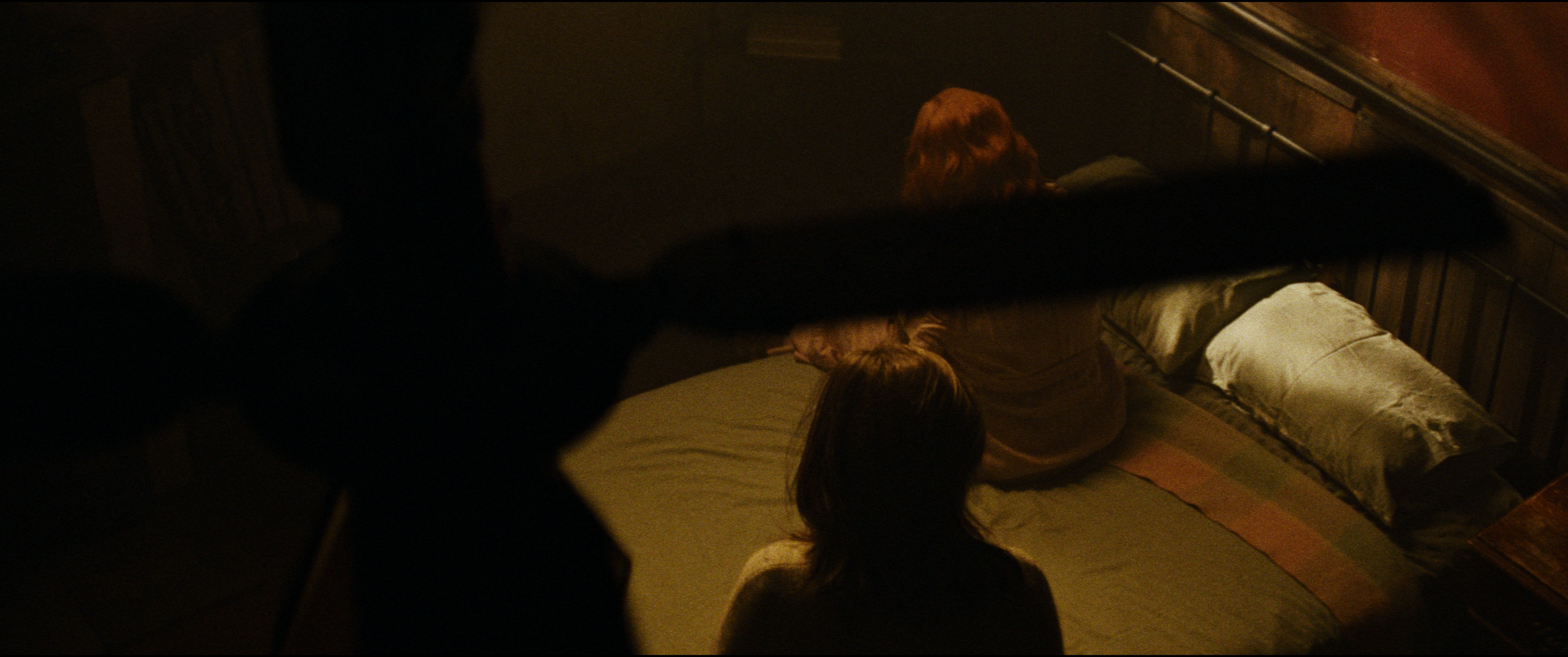
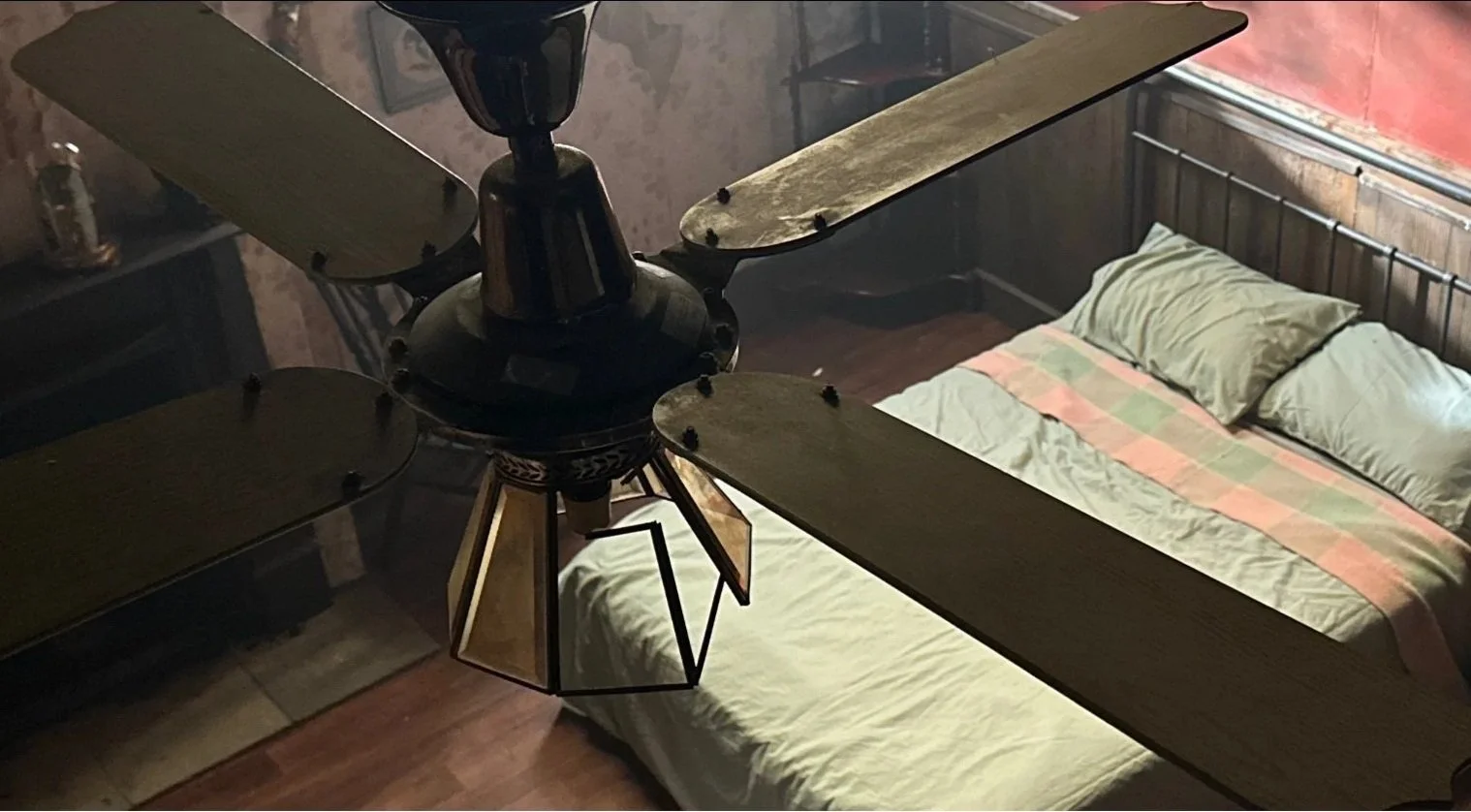
(Above) Final frame of the top down composition through the ceiling fan in The exorcism of Joan Vollmer (2026). (Below) Preproduction image of the same shot