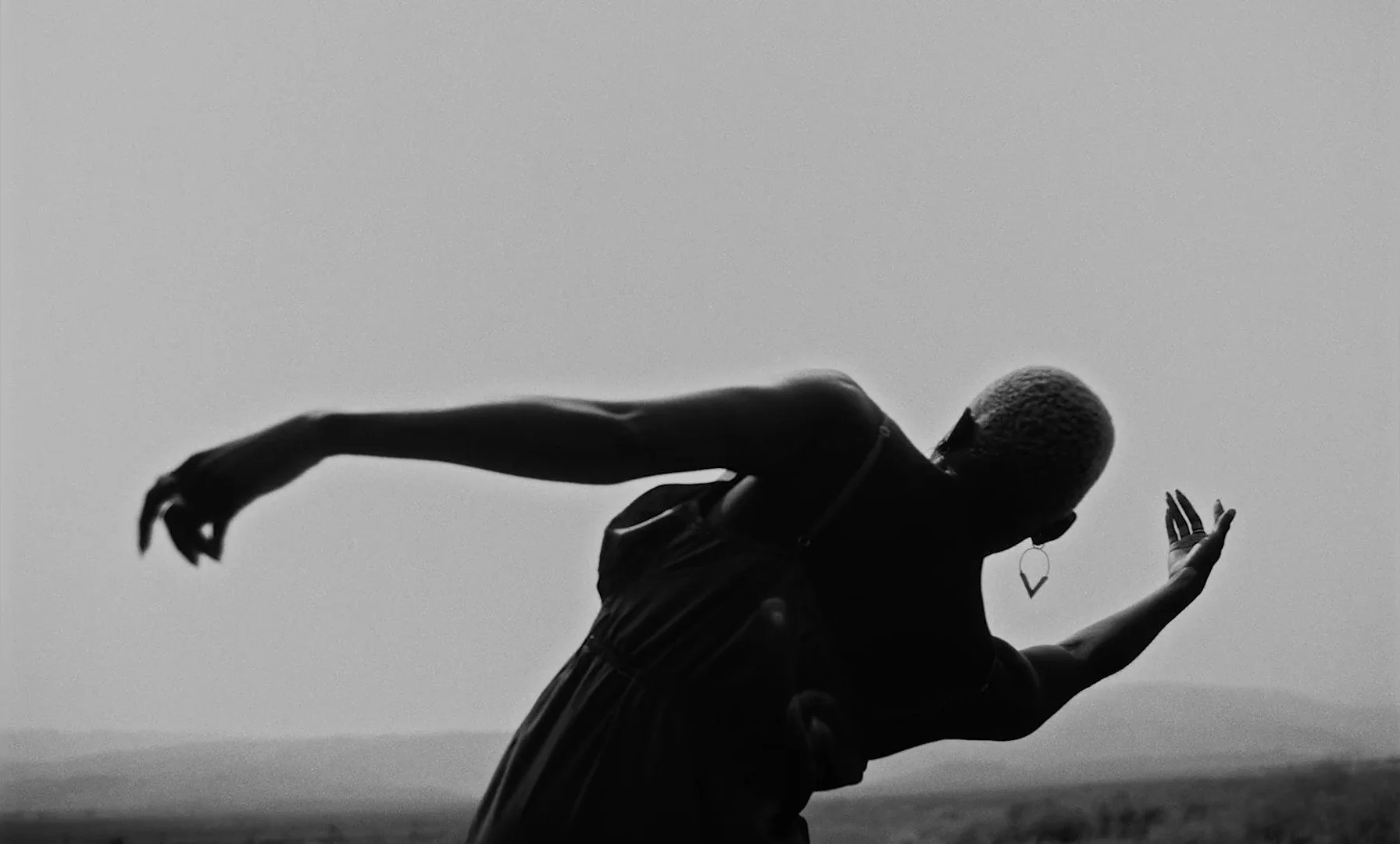
Dance as Cinematographic Knowledge

Dance of Camera
Chapter 2
“Dance film is a visual art that involves movement, strength and physical awareness. What better field for a dancer”
Dance as a Way of Knowing
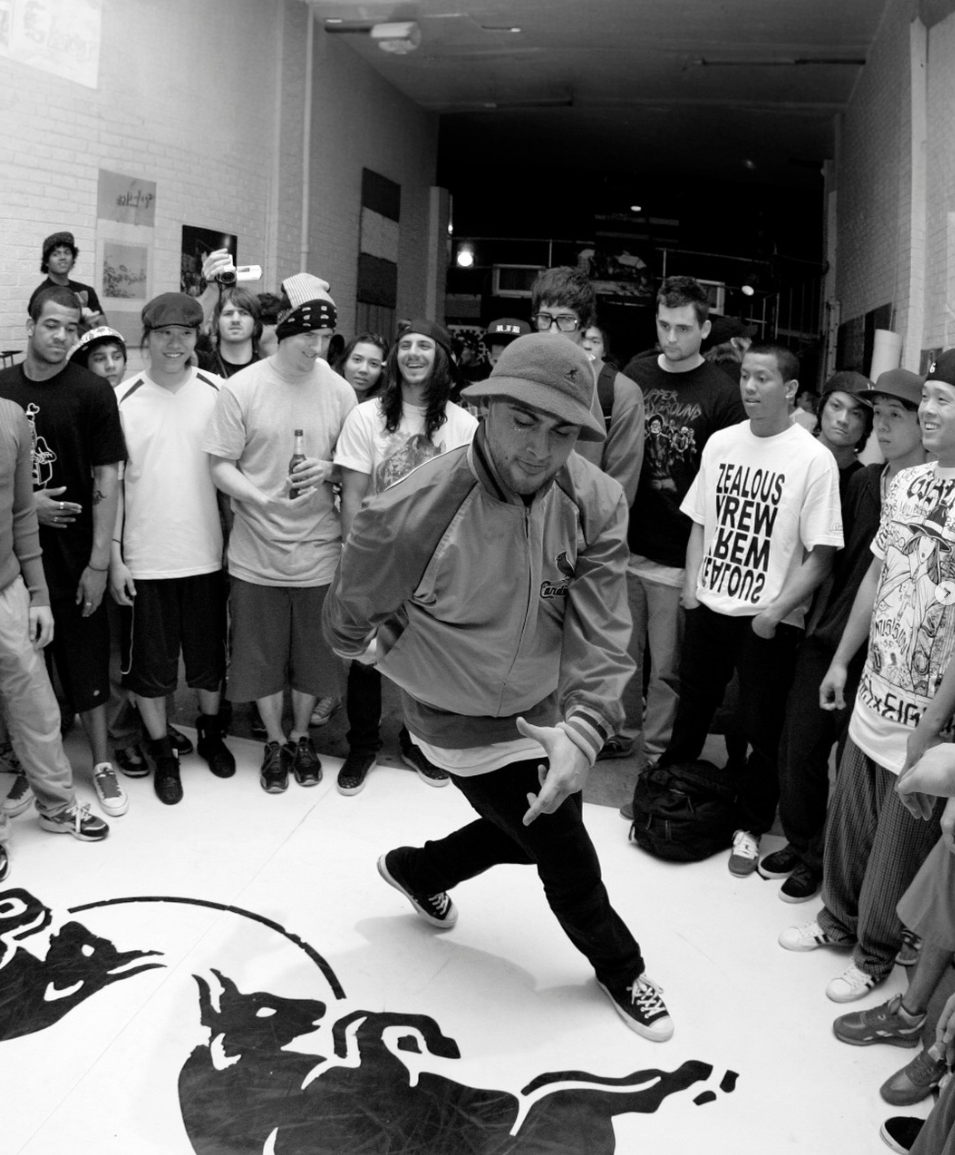
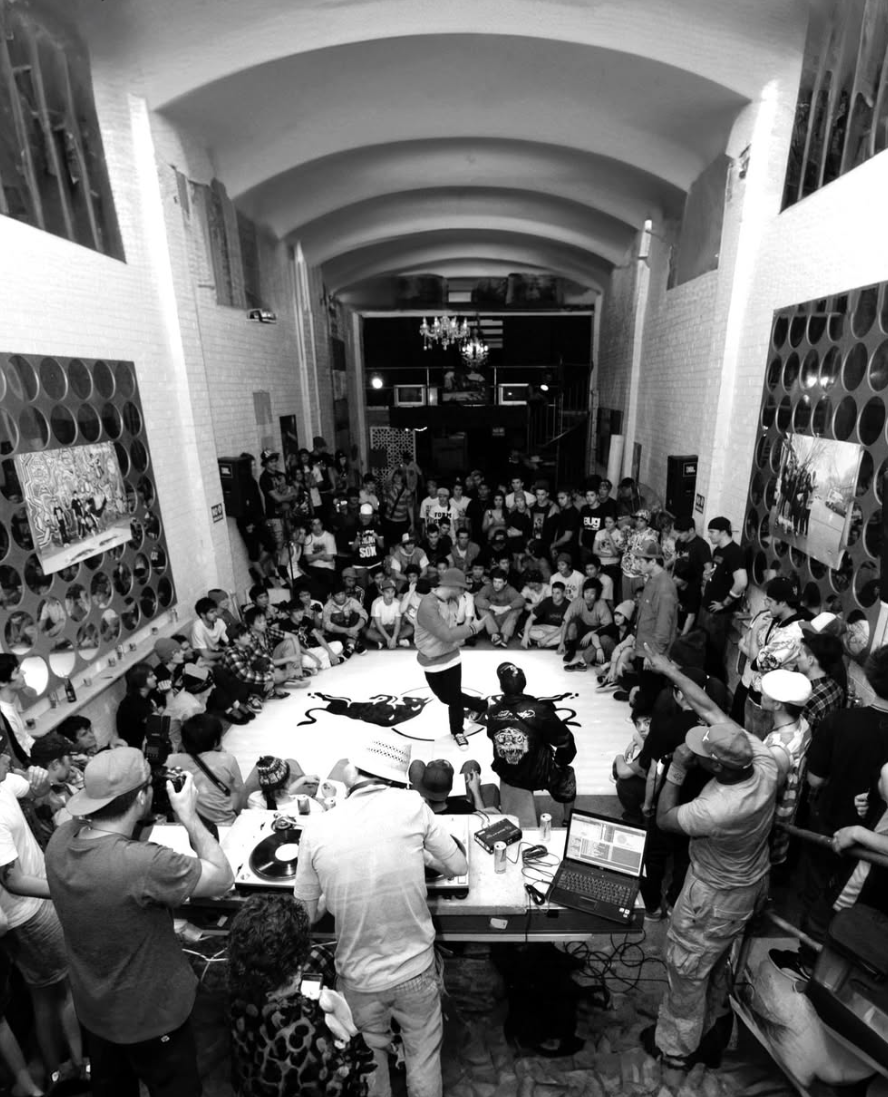
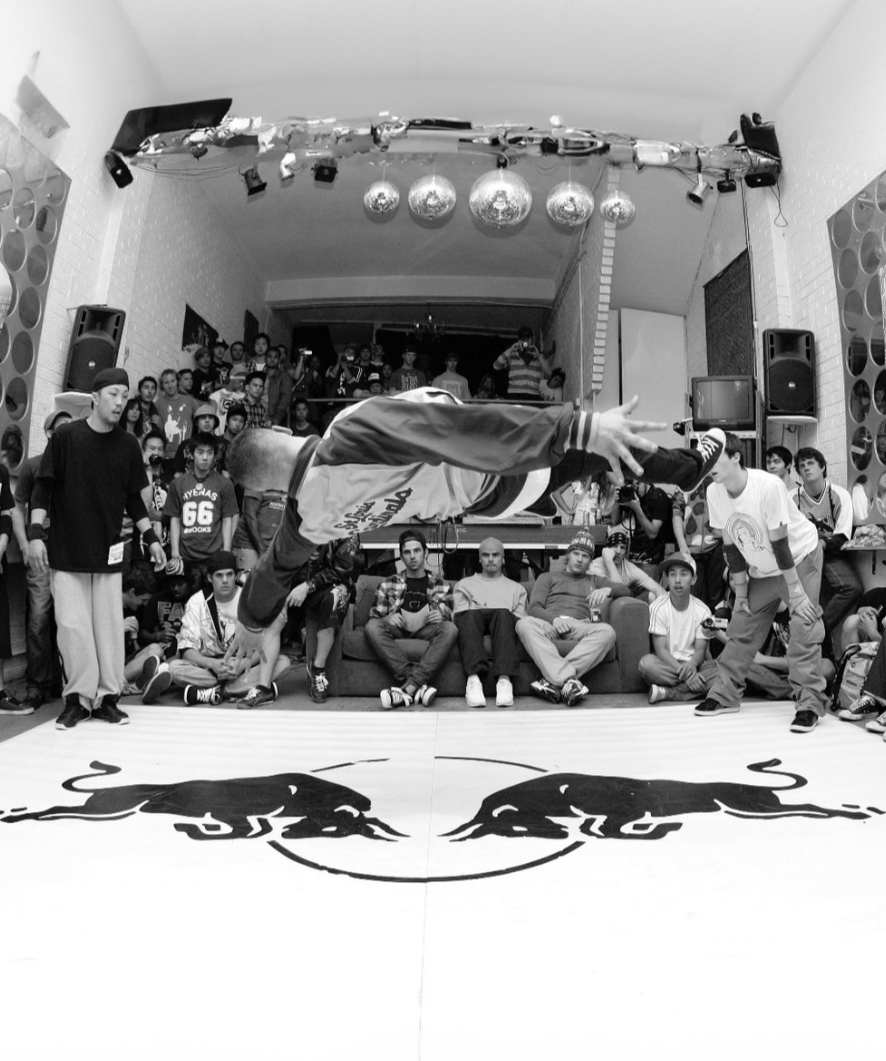
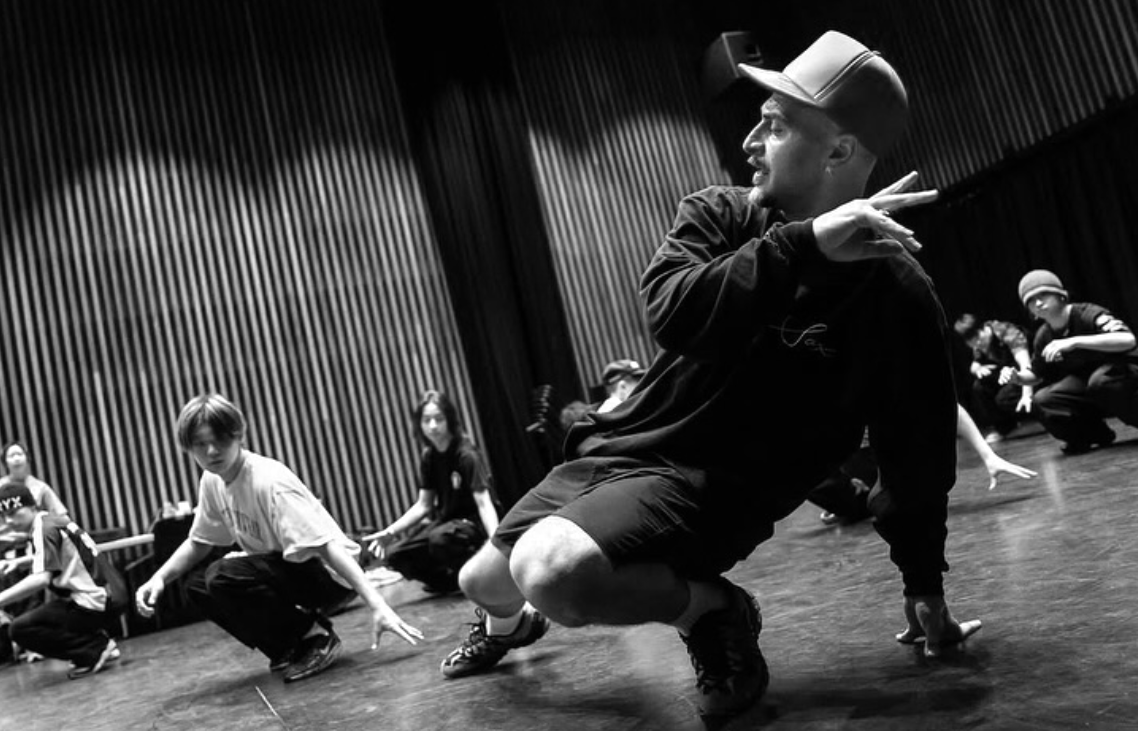
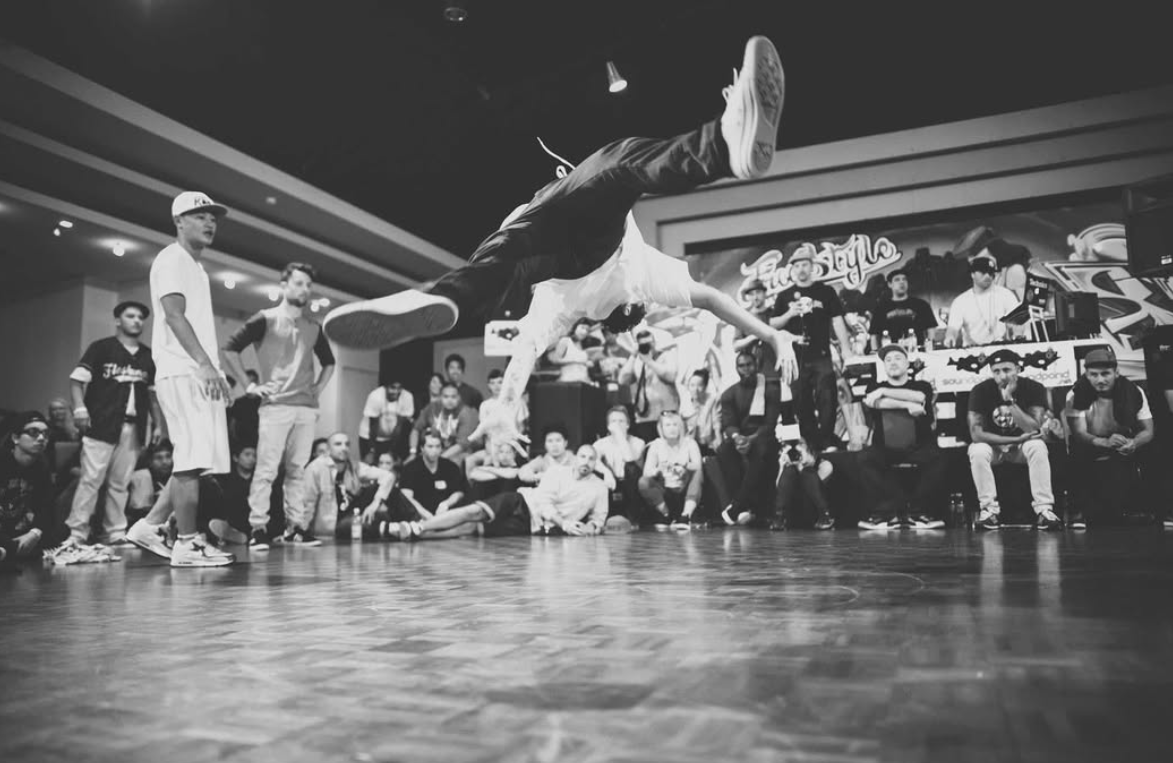
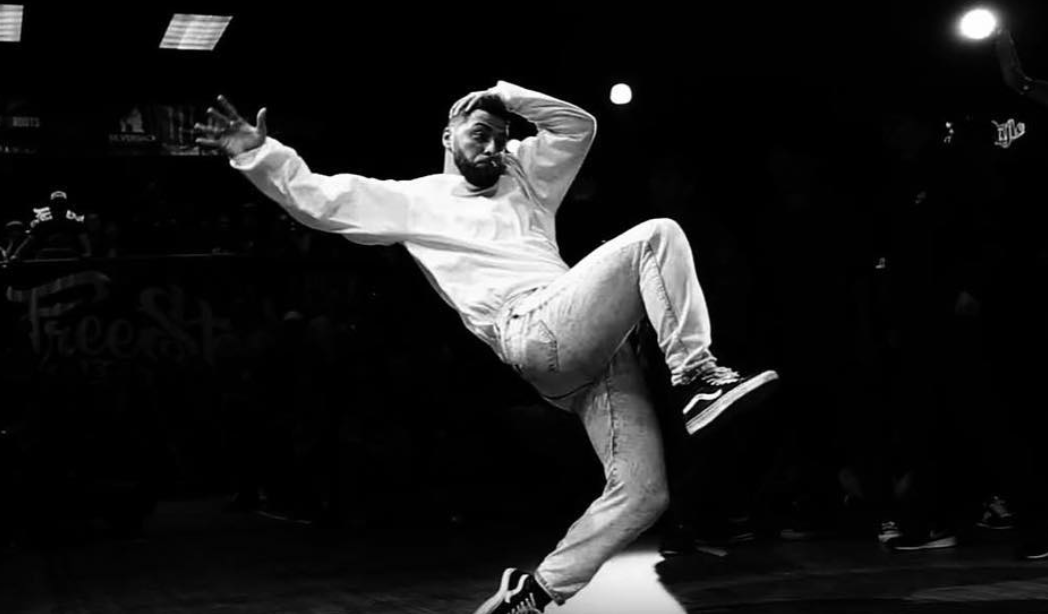
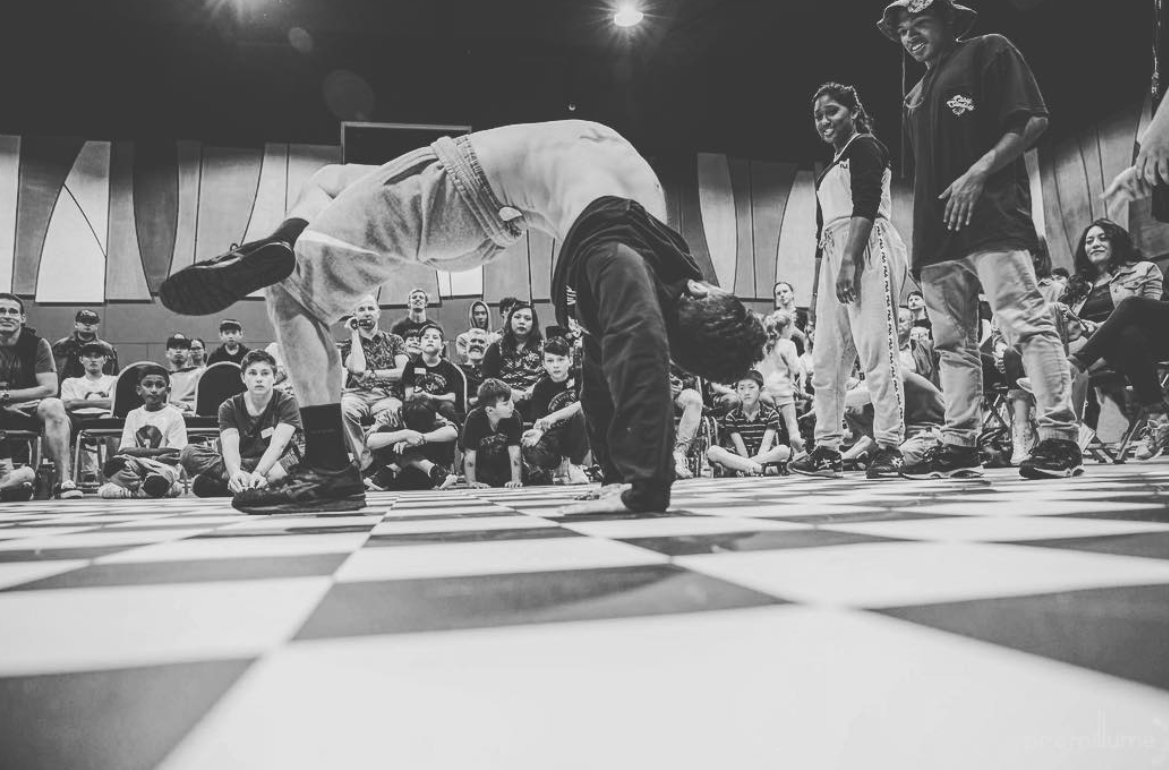
Dance training develops knowledge that is often challenging to articulate, as this information is traditionally demonstrated physically. In my own breaking practice, this includes rhythm interpretation, movement pattern recognition, direction anticipation and weight distribution. This training also involves a solid foundation in understanding how bodies occupy and move through space and how physical forms and pathways can be arranged aesthetically.
Karen Pearlman’s examination of dancer and filmmaker Shirley Clarke provides a useful framework for understanding this knowledge. Pearlman draws on theories of embodied experience to consider how Clarke’s years of dance training became instilled in her filmmaking practice. She argues that the movements of trained dancers are more specialised and considered than the movements of those without dance training, describing this as learning to think “with limbs and lungs” (Pearlman, 2025, p.71). Pearlman further argues that dance training requires coordination over extended periods, incorporating bodies, sounds and spaces, as well as “communicating, imagining, sensing, predicting, judging and remembering with physical rather than verbal gesture” (Pearlman, 2025, p. 72).
Pearlman’s analysis of Clarke closely aligns with what I have come to understand about my own approach and dance practice. When dancing with another person, I’m rarely responding to their completed movements; rather, I am considering the small physical details that indicate where or what movements may be developing. The shifting of weight from one foot to another can indicate a direction change, posture and body shape can suggest speed, eyeline can signify orientation and breath can determine the intensity of an approaching movement. None of these cues, however, can guarantee what a dancer will do next, but together they allow me to anticipate rather than simply react.
Erin Manning’s concept of ‘preacceleration’ further supports this approach. Rather than accepting movement as “a quantitative displacement from a to b”, Manning describes preacceleration as “The virtual force of movements taking form” and refers to its in-dance practice as the feeling of movement gathering before the movement occurs (Manning, 2009, p.6). Manning further outlines that this approach “does not necessarily foretell where a movement will go” (Manning, 2009, p.6). Her discussion of stillness develops this idea further, describing a body “standing still requires constant correction” and elaborates on these corrections referring to them as “virtual micro movements” (Manning, 2009, p.43). This is useful as it positions movement not only as a physical displacement from one location to another but as something that can already be developing within the body.
For a dancer, the adoption of this concept means responding to the preparation of movement rather than waiting for the movement itself. I have begun to identify a similar process in camera operation. When working with actors in complex blocking situations, I pay particular attention to their feet, posture and eyeline. These cues can help me anticipate probable movement and therefore allow me to prepare myself accordingly, redistribute my own weight and prepare a pathway to stay ahead of the action.
This became increasingly apparent on the set of Only Kids. The actors and I rehearsed the blocking repeatedly before the scene, allowing me as the camera operator to develop a solid understanding of the actors’ movements and proposed pathways. However, the performance was not identical for every take. Actors often took small liberties adjusting timing or movement, but my familiarity with the blocking gave me structure within which to operate, allowing me to focus on the actor’s momentum, weight distribution, posture and eyeline to predict and stay ahead of these variations in performance. In instances where I could anticipate a change, I would leverage this embodied experience and attempt to preserve the shot making the resulting camera adjustment feel intentional.
At the time I didn’t consciously identify this approach as an application of dance theory. Much of it occurred naturally, where my body reacted without thinking. Only through reflection on the process and on my camera practice did I recognise how frequently I was drawing from physical knowledge developed through dance.
Shirley Clarke described a similar reflection of dance within her filmmaking:
“I’ve realised that all my films are dance films. Every film of mine is dance. Everyone. It’s clear in the way I use the camera, my editing, my sense of rhythm. I learned so much from being a dancer. I could not have been as good a filmmaker had I not danced” (Clarke, as cited by Pearlman, 2025, p.70)
Clarke’s reflection represents an assessment of her own practice rather than providing evidence that dancers make better filmmakers. What adds value to my research however is her recognition of knowledge developed through dance extended past the act of dancing and became relevant in her use of camera, editing and rhythm. Pearlman’s analysis similarly considers how the “intelligence and ways of thinking” imprinted through Clarke’s years of dance manifested in her filmmaking practice (Pearlman, 2025, p.71)
This reinforces a central concept to my research, that dance training may provide forms of embodied knowledge that can be brought into cinematographic practice. If these concepts remain relevant when the dancer steps behind the camera, the next question may be how the camera itself can participate in the organisation of movement.
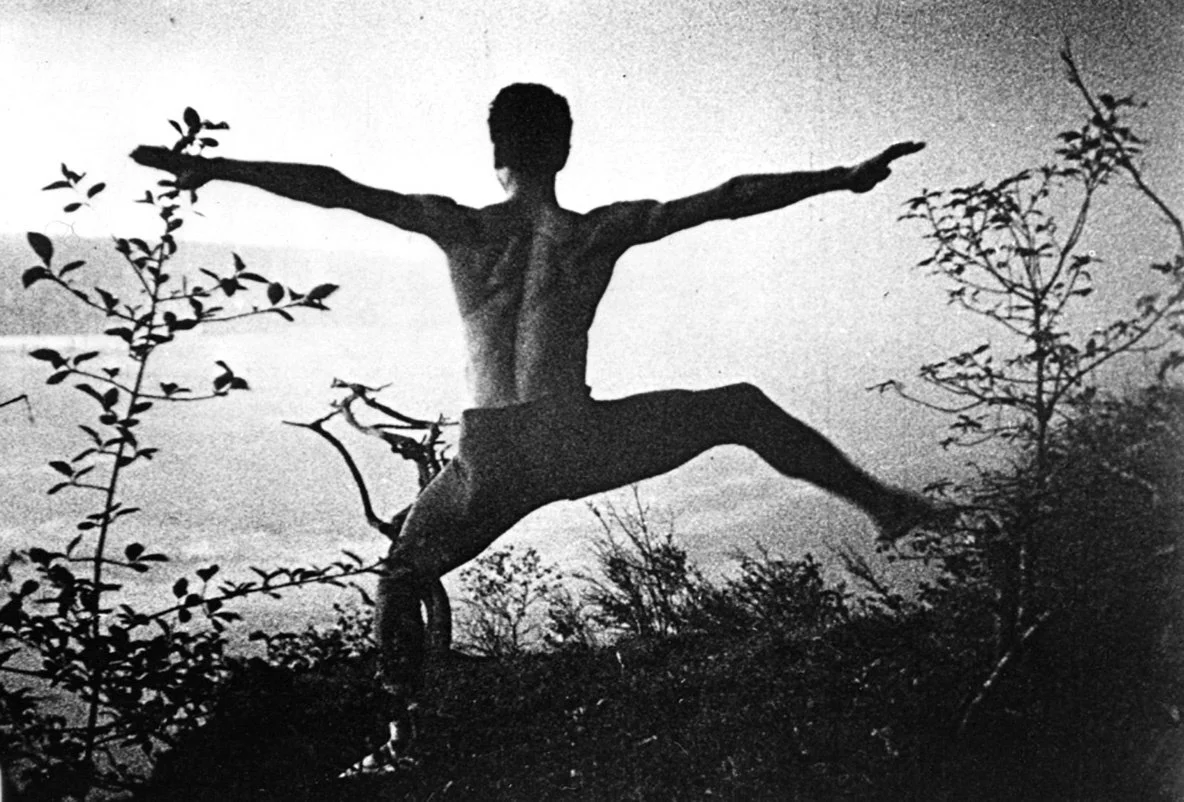
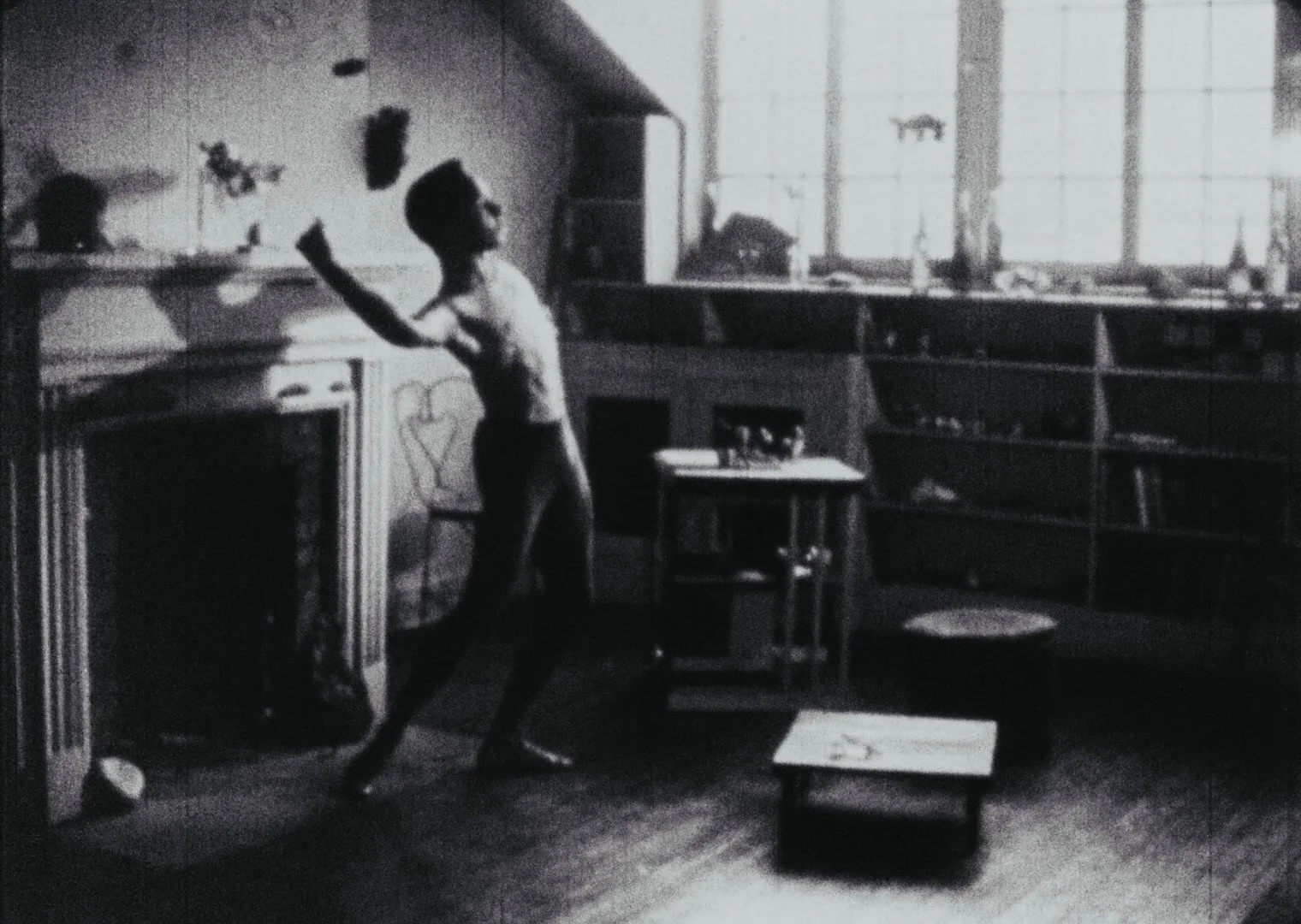
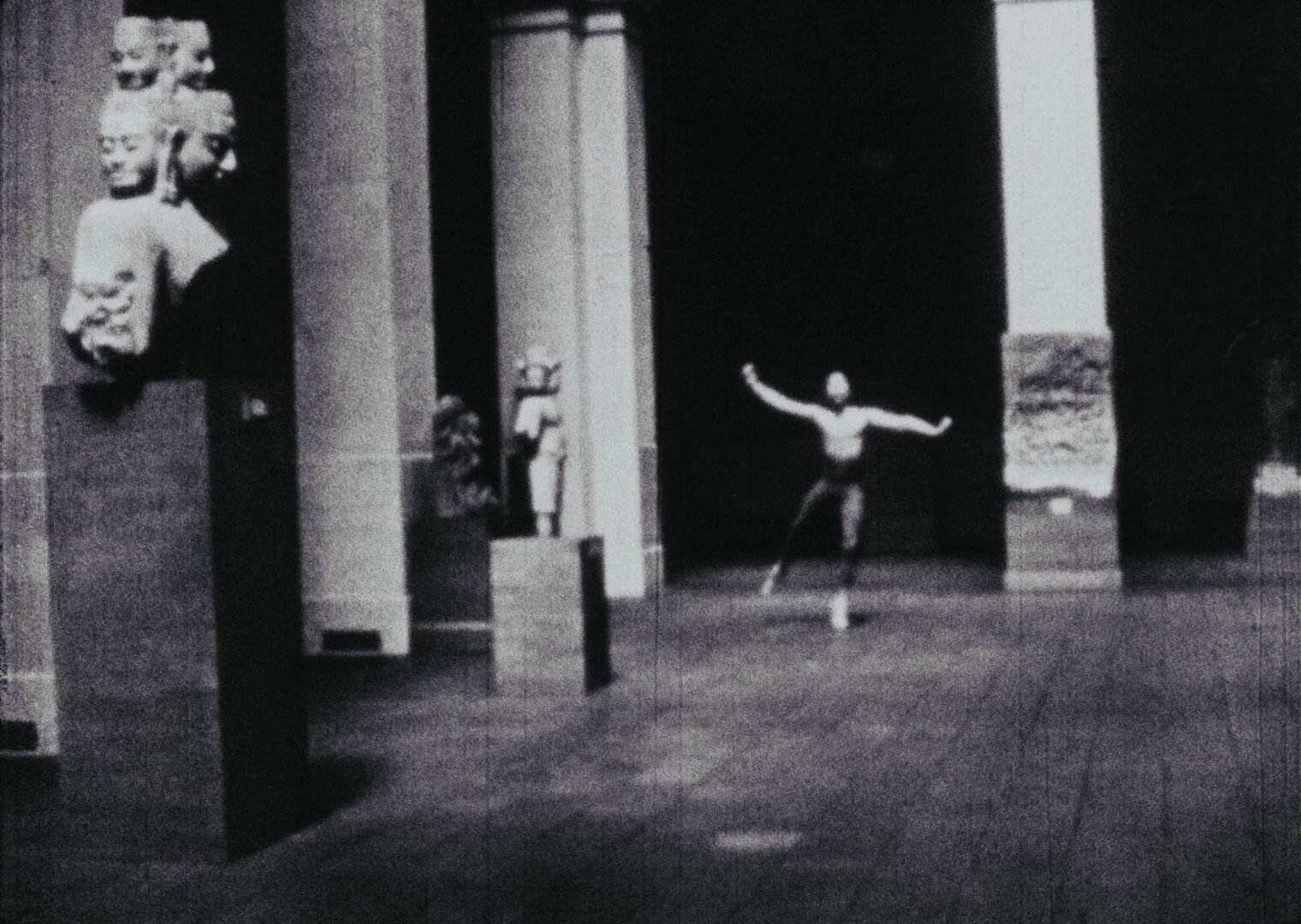
Talley Beatty's movement across cinematic spaces in A Study in Choreography for Camera (1945)
“Videodance is a dance filmed in a way that extends and enriches the dance. Videodance exists in such a way that the dance cannot be seen in this form without filmic devices”
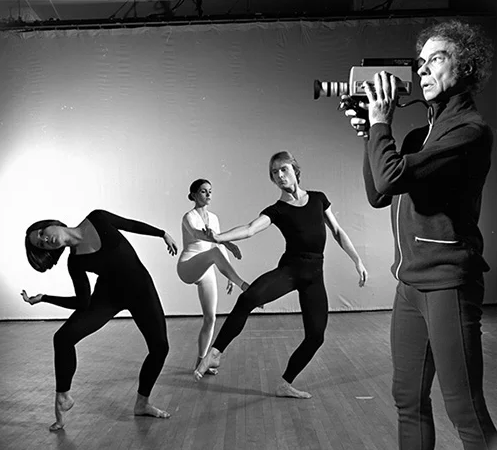
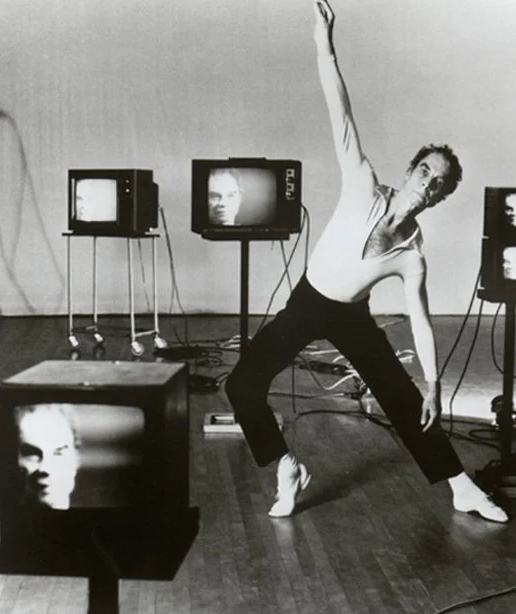
Merce Cunningham and Charles Atlas alongside performers working within shared choreographic space in Roamin' I (1979)
From Recording Dance to Choreographing the Camera
Screendance provides a framework through which to examine the relationship between dance and cinema. Instead of suggesting a single rigid definition, The International Journal of Screendance 1 (Rosenberg & Kappenberg, 2018, p. 1) broadly outlines the area at the intersection between dance, performance, visual art, cinema and media arts. Screendance’s broad definition is important as it includes practices in which choreographic language, composition, movement, space and time interact rather than presenting the camera as a way of preserving performance.
A significant distinction can therefore be made between recording choreography and constructing choreography for camera. In a standard documentation of a staged performance, choreography is presented within the live event, and the camera simply captures it. Screendance instead uses the specific properties of cinema to transform and enhance how the movement is presented on screen.
Angela Kassel elaborates on this concept and makes that distinction quite clear: “Videodance is a dance filmed in a way that extends and enriches the dance. Videodance exists in such a way that the dance cannot be seen in this form without filmic devices” (Kassel, 2016, p.177). Kassel contrasts the concept of videodance with the recording of a stage performance from a frontal audience position, describing this practice as documentation. She identifies space, time, body, perspective and montage as areas through which cinematic techniques can transform the presentation of dance (Kassel, 2016, p. 175-177).
This difference shifts the perspective of the camera from being a recording device toward becoming an active participant in the construction of the work. Framing establishes which parts of the body or its environment are visible, the position of the camera determines the relationship through which movement is experienced, composition and scale can transform a full- body motion into an intimate close up and editing can separate movements that occurred together or connect actions that never shared the same space.
Kassel highlights that postproduction, allows films to create movements and sequences that would not otherwise be possible. She explains that "by editing, movements can be created that have never been shot in this way and that could never be performed in reality” (Kassel, 2016, p. 178). As a result, the choreography seen on screen can be distinctly different from what was captured in front of the lens.
This also changes the spectator’s relationship with the movement. In a live performance, the audience may retain a considerable amount of agency over where to direct their attention. Cinematic framing and composition take over that agency and influence what is emphasised in the performance. Through camera position, framing and editing filmmakers can highlight one body over another, conceal information, reveal detail and redirect attention through space. In this regard cinematography doesn’t simply photograph choreography, but it also choreographs attention.
The work of Maya Deren provides an important example of this relationship. Deren’s A Study of Choreography for Camera (1945) showcases an early example of dance being constructed specifically through cinematic form rather than simply being documented by a camera. Through the relationship between Talley Beatty’s movement, camera movement and editing, Deren builds a continuous dance across disconnected spaces. Ruiz Carballido describes this as a “dual choreography” in which the dancer moves in front of the camera while “the camera also dances and allows the space to dance” (Carballido, 2015, p. 132). Deren’s approach can therefore be considered as including cinematic space, movement and editing as active components of choreography itself.
Merce Cunningham’s later experiments with film developed a similar stance on the distinction between theatrical and cinematic space. Cunningham is described by David Vaughan to have recognised that the camera viewed space differently from a theatre spectator and that working for the screen required “a radical revision of spatial structure” (Vaughan, 2002, p.35). Cunningham further observed that the camera position, cut and composition could affect “the time, the rhythm of the movement” (Cunningham, as cited in Vaughan, 2002, p.36). Vaughan describes Cunningham and his frequent collaborator Charles Atlas’s experiments as collectively developing “a grammar of choreography for camera” (Vaughan, 2002, p.36).
These concepts extend beyond dance. Once framing, perspective, camera movement, editing and temporal manipulation are understood as active components of choreography, movement on screen can be considered as an active partnership between performer and camera. What is presented on screen not only emerges from the performer’s body but through the interaction between the performer’s movement, camera movement, framing, space and time.
Screendance often explores what cinema can contribute to dance. My research, however, utilises screendance as a foundation and extends beyond by asking what dance can contribute to cinematography. If dance’s choreographic practice can encompass rhythm, proximity, spatial relationships, framing movement and stillness, then quite naturally these principles can migrate to films where dance is not the subject. They can provide a way of thinking about camera practice in narrative cinema.
This perspective shifts discussion from choreography in front of the camera and focuses on the body responsible for operating it.
My Practice as a Dancer
The Cinematographer as an Embodied Participant
Cinematography is often attributed directly to the camera; the camera follows the actor, approaches the character, observes and reacts. However, in the physically operated form of cinematography, these movements are produced through a human body. A handheld camera doesn’t independently perceive an actor’s movement and respond, the cinematographer must see, anticipate and then execute that response. Therefore, the camera movement is affected by the operators’ balance, strength, weight distribution, momentum, spatial awareness and timing. This becomes particularly relevant to my research as these qualities are also developed through dance practice.
Tim Glenn’s discussion on cinematography as a part of “The Somatic Camera” within Art in Motion outlines this relationship between physical awareness and camera operation. This academic collection places Glenn’s ‘Performance Techniques Behind the Lens’ alongside Stephanie Herfeld’s exploration of embodied camera movement, establishing the operator’s relationship to the camera as a specific area of research. (Boulégue & Hayes, 2015)
Glenn argues that: “The camera operator is far more than a technician and is empowered with the ability to artistically influence the qualitative nature of the resulting footage.” (Glenn, 2015, p. 69)
Glenn further suggests that the artistic potential of camera movement relies not only on the camera’s physical movement but on quality and awareness of how that movement is performed. He emphasises the importance of bodily sensitivity and conscious perception, then outlines that this heightened appreciation of timing, energy and direction can transform a moving camera into a ‘Dancing Camera’ (Glenn, 2015, p. 69).
This distinction is significant to the practice of cinematography. Two operators may receive the same instruction and in turn produce two totally different shots. The physical pathway taken by both operators may be essentially identical, however the acceleration, deceleration, proximity, balance and responsiveness may radically differ. The camera path therefore only describes part of the movement, the human aspect through which that path is taken also forms a substantial part of the image produced.
Similarly, Evann Siebens writes about the relationship between dancers and cinematography: “Dance film is a visual art that involves movement, strength and physical awareness. What better field for a dancer” (Siebens, 2002, p. 223)
Siebens describes filming dance as a visceral experience, suggesting that dancers’ familiarity with movement, strength and physical awareness can be valuable in cinematography. Rather than suggesting that dancers are better camera operators, Siebens highlights the embodied experience as a potential resource for cinematographic practice. This concept connects with Pearlman’s discussion of embodied cognition, in which dance training involves forms of thinking expressed through physical action (Pearlman, 2025, p. 72). Camera operation that appears intuitive can be viewed as a form of embodied knowledge, where perception, anticipation and decision making are acted on through the operator.
Stephanie Herfeld through her analysis of filmmaker Marie Menken examined how Menken used her bodily movements to shape the image, describing her camera as that of “a person on the move” (Herfeld, 2015, p. 93). Instead of simply positioning the camera, Menken “inserts the movement of the body into the substance of the image itself” (Herfeld, 2015, p.92). Herfeld also draws on Douglas Rosenberg’s comparison between screendance and contact improvisation, where ‘physical, visual and auditory contact can guide movement’ (Rosenberg, as cited by Herfeld, 2015, p.94). Regarding cinematography, these ideas can suggest that the operator’s movements can be shaped through an ongoing exchange with the performer and environment, responding to changes in posture, eyeline, weight, breath, rhythm and proximity rather than relying on predetermined camera movements.
This suggests an important distinction between following and responding to a performer. While following involves the camera reacting to movement after it occurs, responding requires the cinematographer to continuously observe, anticipate and adjust their position in relation to the performance. During the filming for Only Kids (2026) we placed significant emphasis on rehearsals to establish the blocking of complicated sequences, but each take introduced small variations in performance, timing and movement. Instead of strictly following planned marks and camera positions, I used my embodied awareness of movement to adjust based on these changes. This approach combined both a choreographic practice and an improvisational approach, using rehearsals as a guide to remaining flexible and adaptable and respond to the performance.
With all this considered embodied cinematography can be understood through the interconnected relationship between performer, cinematographer, camera and space. Each element can directly influence the others; the performers’ movements inform the cinematographer’s decisions, while the camera position, lens choice and framing shape how the movement is captured. The surrounding environment also influences how the performer and cinematographer can move within a space.
Importantly, this relationship doesn’t always require the camera to move. Dance principles also suggest embodied cinematography involves recognising stillness, anticipation and restraint. The camera may choose to follow, approach and withdraw from a performer, but it is equally as impactful to remain still. In this case, embodied cinematography is not defined by how much the camera moves, but by the intention of that movement or lack thereof.
Embodied cinematography is therefore less attached to whether the camera moves and is more connected with how the cinematographer uses physical awareness to respond to performance and space. These decisions shape the resulting image on screen and influence how the audience experiences movement, introducing yet another embodied relationship between the cinematographer, performer and the audience.
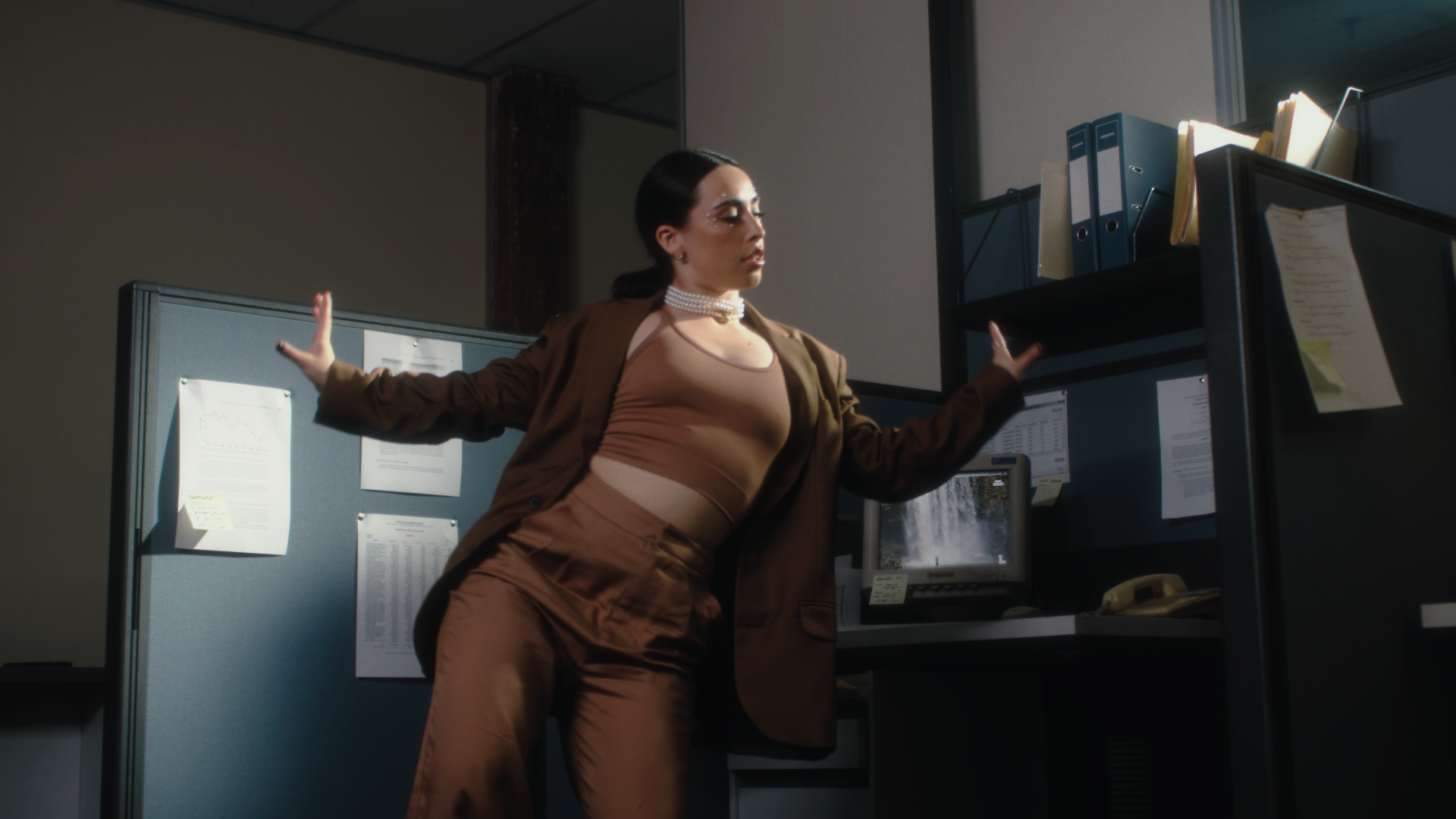
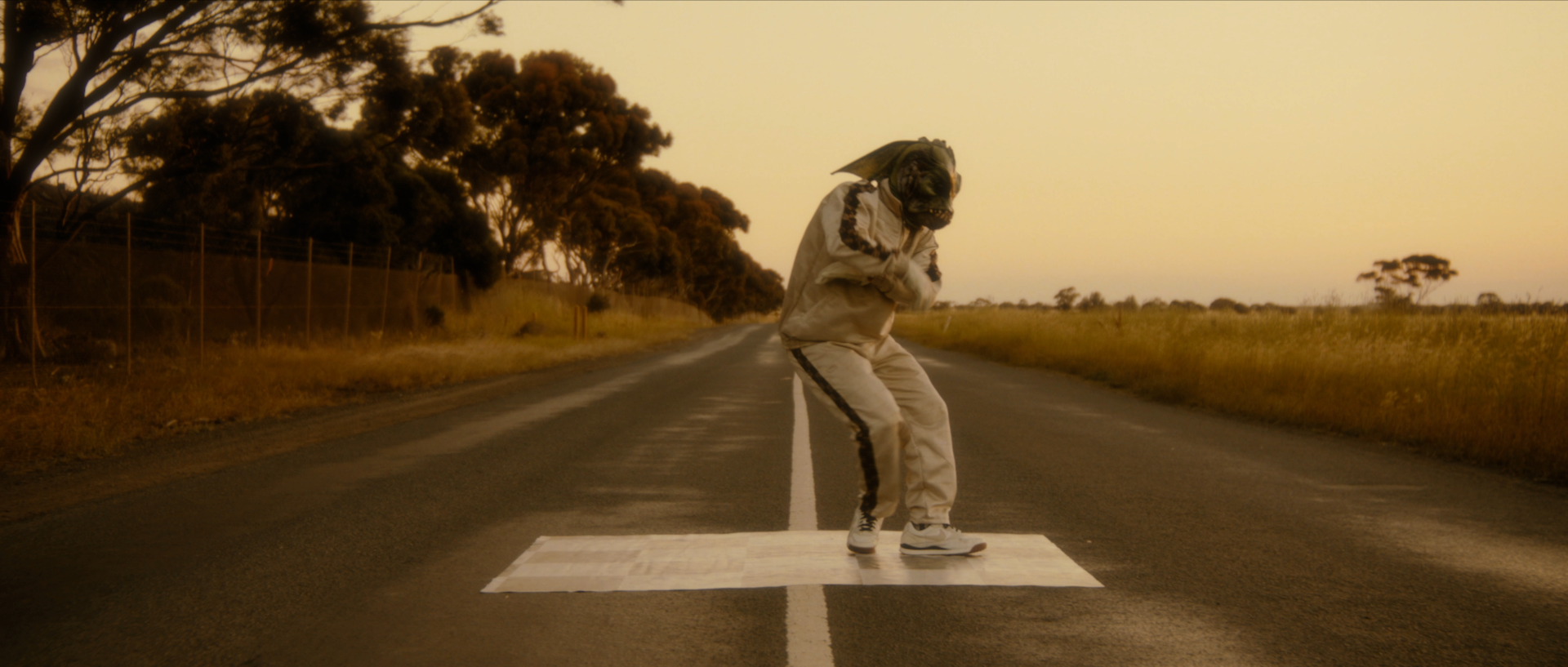
A collection of images from dance works I have produced. (Left) Hena Memishi in the music video Businessman by Ava, (Middle) Joshkun Arslan in the music video Function by Tentendo. (Right) Anthony Lawang in the music video Make me HIgh by Tentendo.
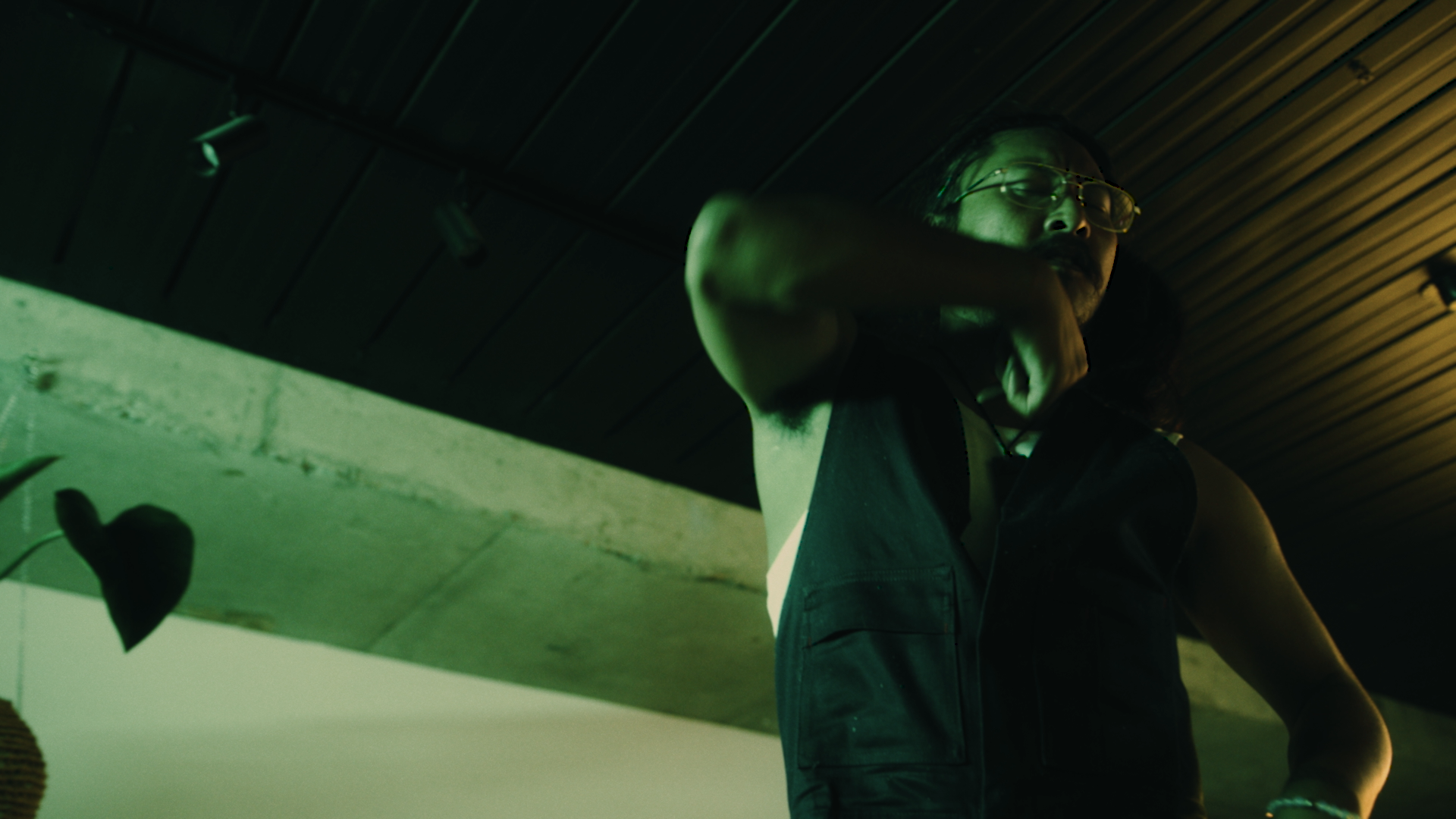
“The impact of affect on the body intensifies sensation such that the ‘dance’s body’ as object of vision is also felt from within”
From Embodied Camera to Spectator
If cinematographic movement can be established through an embodied relationship between the cinematographer, performer and the space they inhabit then it becomes necessary to consider how that movement is received by the viewer. Cinematography is often acknowledged through what spectators see such as composition, colour, framing, perspective and movement; the kinaesthetic approach to cinema, however, provides a way of enquiring what spectators may experience bodily while seeing.
Vivian Sobchack’s account of film provides insight on this perspective. Sobchack argues that ”the film is not, therefore, merely an object for perception and expression; it is also the subject of perception and expression” (Sobchack, 1992, p.167).
Sobchack points to ‘cinematic technology’ within her writing and continues to describe this technology as more than a collection of mechanical instruments. Instead, the camera, projector and other mechanisms form the film’s body, allowing it to perceive and express, and therefore “substantially embody the film” (Sobchack, 1992, p. 205). She also emphasises that movement is fundamental to this body, even when the image appears static.
Building on Sobchack’s understanding of the film’s body, Adriano D’Aloia explores how camera movement can further influence the spectator’s embodied experience.
D’Aloia writes: “Conceived as film’s body movements, camera movements do not simply produce a motor activation, but rather are capable of generating or implicitly suggesting a relation between the movement perceived on the screen and the movement that is initially experienced by the spectator” (D’Aloia, 2012, p. 104)
This perspective helps shape how I think about Cinematography. It highlights that the viewers themselves can feel a sense of movement even without replicating what they see on screen. It also builds on Sobchack's ideas by linking dynamic movement in films to the spectator's own bodily experience.
D'Aloia's exploration on camera movement and spectatorship resonates with the ideas Dee Reynolds and Matthew Reason examine on kinaesthetic empathy. Reynolds and Reason's exploration highlight how we not only experience movement visually but also experience it through our bodies. This prompted a further within my research, if a film audience can’t physically move through a performance space, can cinematography encourage a similar sensation within their body.
Reynolds explains an alternate way to explore this question through her distinction between emotion and affect. Rather than focusing on specific emotions such as happiness or sadness, Reynolds considers how movement can create bodily sensations that may be experienced before they are consciously understood as emotions.
She writes: “Affective empathy does not take as its object a perceived other, such as the dancer, which is neither ‘self’ nor ‘other’. The impact of affect on the body intensifies sensation such that the ‘dance’s body’ as object of vision is also felt from within, ‘enfolded’ through kinaesthesia.” (Reynolds, 2012, p. 129).
Reynolds’ concept suggests that spectators can experience movement through their own bodies rather than just observing another person’s movement. Sobchack’s understanding of the film’s body and D’Aloia’s discussion of camera movement offer a way of considering how cinematography might encourage bodily engagement through movement, rhythm, framing and stillness. Within the context of my research, the intention is not to create a specific emotional response, but to explore how choreographic principles can help shape a spectator’s experience of movement and space within a film.
Building on these ideas, kinaesthetic engagement does not necessarily require spectators to watch a dancer and directly identify with their movement. Instead, this may develop through the relationship between the performers, camera movement, framing, distance, rhythm and stillness. This helps me understand affective cinematography as more than using camera movement to create a particular emotion. Rather, it is about how the cinematographer uses their own bodily awareness to make decisions about movement, composition and space, which may influence how the audience experiences a film. My research then evolves into exploring how choreographic principles can shape what the audience sees and potentially feels.
While my research explores how cinematography can shape the audience's visual and physical experience, I can't confirm how the audience genuinely feel without testing and surveying. Instead, my creative practice focuses on how choreographic principles can inform cinematographic practice and encourage audiences to connect both on a bodily and emotional level.
Embodied cinematography can therefore be described as encompassing the nuances of movement. How we approach and pull away from a subject, how we follow and anticipate their actions and the balance between stability and instability. Thes ideas highlight how dance can provide a valuable foundation for cinematographic practice, even when the subject isn't dance itself. The following chapter investigates how to apply these ideas and principles through my own creative works to better understand how embodied knowledge developed through dance can shape my decisions as a cinematographer.